Photo: Annie Spratt / Unsplash (from Jube’s photo library)
If the math book has started to feel like a chore around your house, you are not alone. Sometimes the fix is not a new curriculum. It is getting math off the page and into your kids’ hands.
Math is everywhere already: in the cookie dough, the card table, the grocery cart, and the backyard. You just get to point it out.
Below are hands-on ideas sorted by age, a short list of real living-math books, quick warm-ups, and a one-week plan you can start Monday.
How to use this list
Keep your regular math lessons. These ideas sit beside them, not in place of them.
Each section has ideas for four age bands:
- Preschool (ages 3-5): counting, sorting, shapes, and “more or less.”
- Elementary: facts, place value, money, measurement, and early fractions.
- Middle school: ratios, percents, decimals, area, and data.
- High school: algebra, geometry, probability, and real-life finance.
Pick one or two ideas a week. That is plenty.
Kitchen and baking math
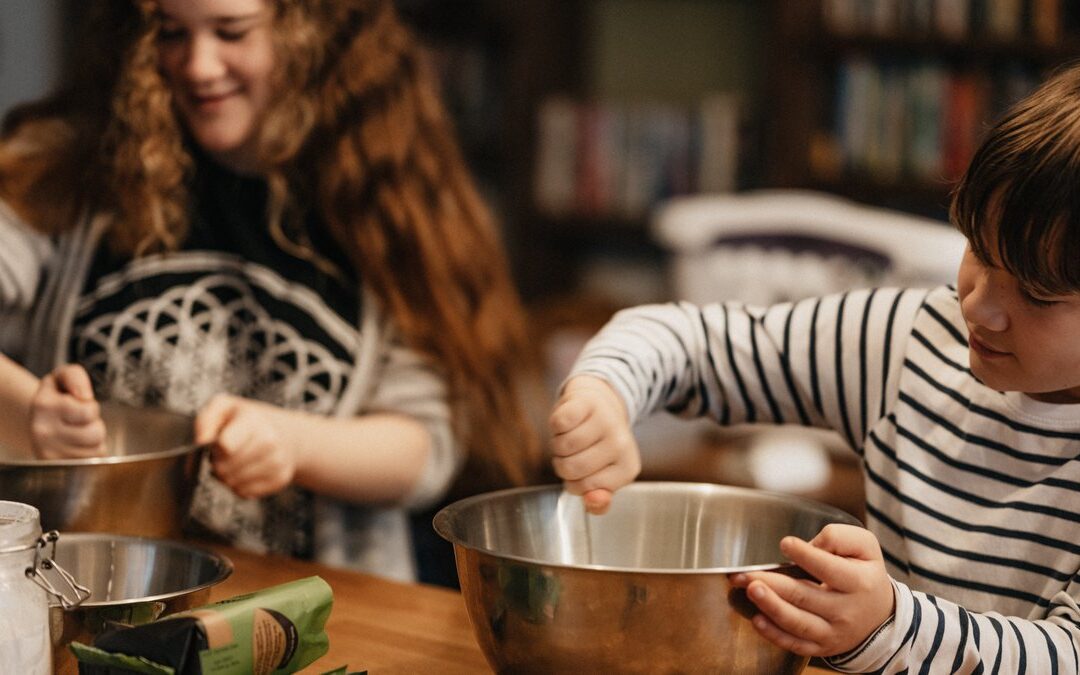
The kitchen may be the best math lab you own. Measuring cups make fractions something kids can see and taste.
- Preschool: Count scoops of flour out loud. Sort snacks by color, then ask which pile has more.
- Elementary: Let them read the recipe and measure. Ask, “How many ¼ cups fill one cup?”
- Middle school: Double or halve a recipe. Then figure the cost per cookie.
- High school: Scale a recipe to feed 30 at co-op. Convert ounces to grams and compare unit prices.
Quick tip: Hide the 1-cup measure. Kids have to work out how to get there with the ⅓ and ¼ cups.
Board and card games
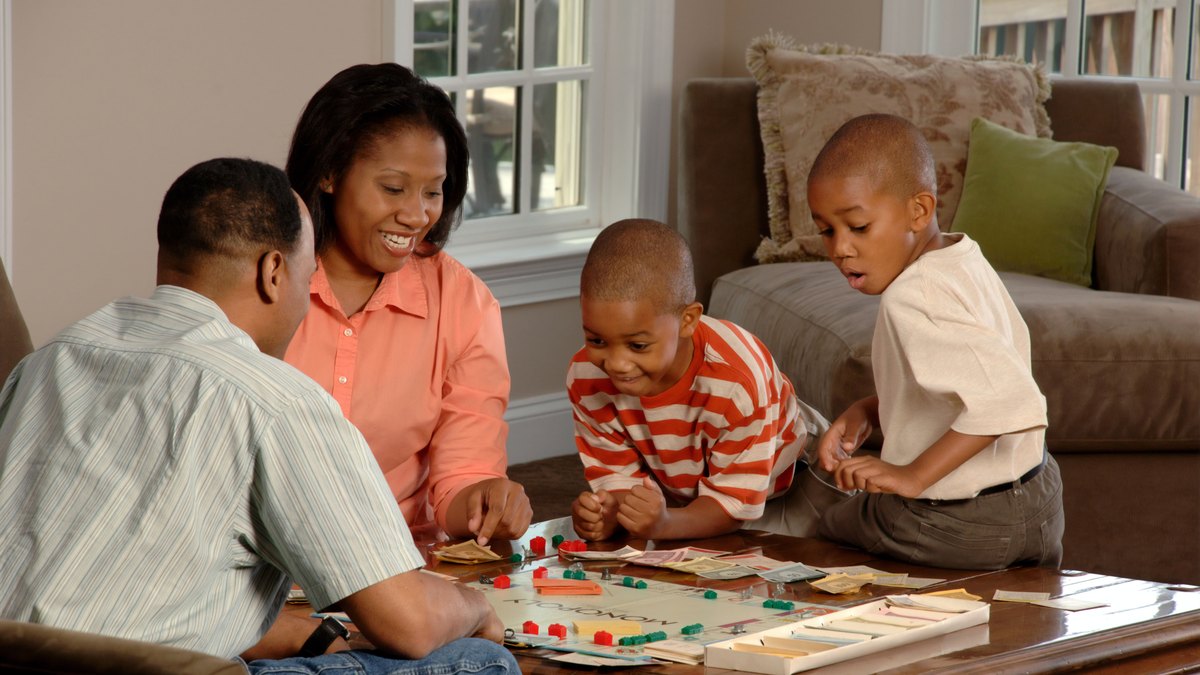
Family game night counts as math class. Kids will add, plan, and spot patterns without being asked to.
- Preschool: Chutes and Ladders and Candy Land build counting and one-to-one matching. Dominoes are great for matching dots.
- Elementary: Play “addition war” with a regular deck: each player flips two cards and the bigger sum wins. Yahtzee, Sum Swamp, and Monopoly (be the banker!) are good too.
- Middle school: Try “multiplication war,” Prime Climb, Rummikub, or Blokus for spatial thinking.
- High school: SET sharpens logic. Cribbage is all quick addition. Ask teens to work out the odds of rolling a seven.
Store and budget math
A trip to the grocery store is a free word problem with snacks at the end.
- Preschool: Count apples into the bag. Find the number 5 on price tags.
- Elementary: Give them a few real dollars to spend. Let them estimate the total before checkout.
- Middle school: Compare unit prices. Figure out what “25% off” saves you.
- High school: Hand over the weekly meal budget. Have them plan, shop, and track spending in a simple spreadsheet.
Math in nature and outdoors
Fresh air helps everybody think. Grab a tape measure and head out.
- Preschool: Collect leaves and sort them by size. Count petals and pinecones.
- Elementary: Measure how far each kid can jump. Track the day’s high temperature on a chart for a week.
- Middle school: Use a homemade rain gauge and graph a month of rainfall. Look for spirals in pinecones and sunflower heads.
- High school: Estimate a tree’s height with its shadow and similar triangles. Pace off the yard and find its area.
Building and LEGO math
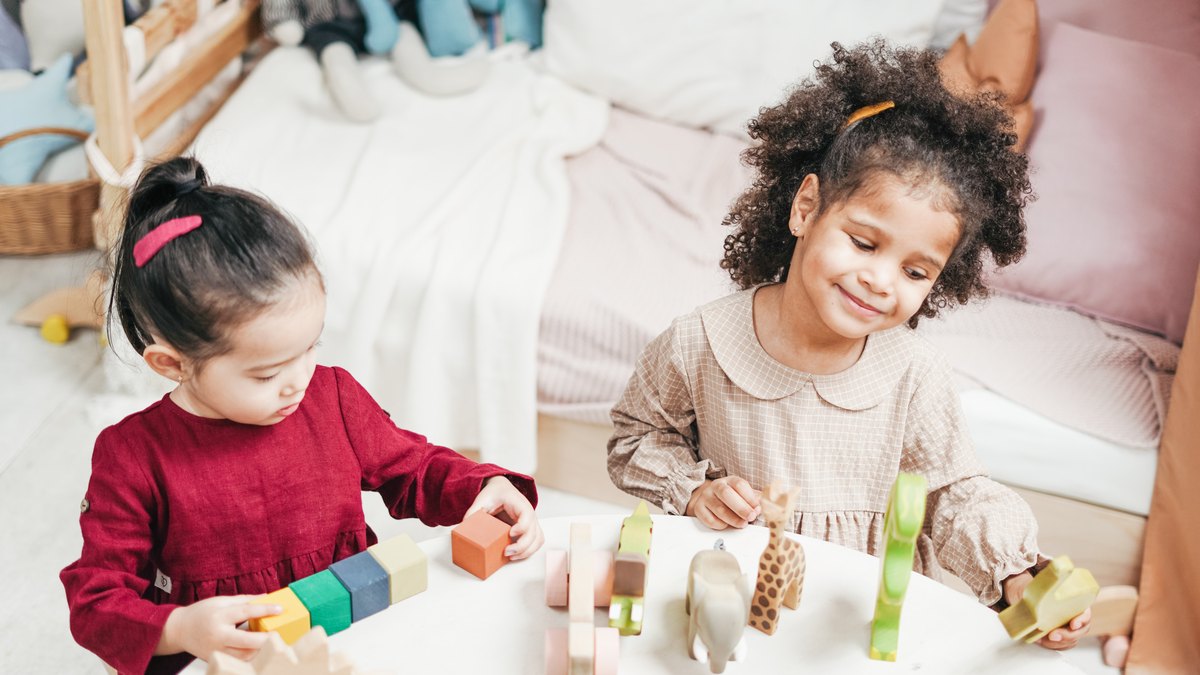
Building blocks are math tools in disguise. Kids learn about balance, symmetry, and size while they play.
- Preschool: Build towers and count the blocks. Copy a simple color pattern.
- Elementary: Use LEGO bricks for fractions: a 2×4 brick is the whole, and a 2×2 is one half. Make a bar graph with stacked bricks.
- Middle school: Build a room, then find its perimeter and area in studs. Build a scale model of your house.
- High school: Design a bridge from craft sticks and test how much weight it holds. Graph the results.
Art and pattern math
Artsy kids often light up when math turns into something beautiful.
- Preschool: String beads in AB and ABC patterns. Fold paint blots to see symmetry.
- Elementary: Draw half a butterfly and have them finish the mirror image. Make pattern blocks into designs.
- Middle school: Make tessellations like M. C. Escher’s. Design a quilt block on graph paper.
- High school: Try compass-and-straightedge constructions or string art. Explore the golden ratio in art.
Math in sports
If your kids live for game day, meet them there. Sports are full of numbers.
- Preschool: Count jumping jacks or baskets made.
- Elementary: Keep score. Time laps around the yard with a stopwatch.
- Middle school: Figure batting averages or free-throw percentages from your own family games.
- High school: Graph running times over a season. Calculate pace and talk about rate of change.
Quick tip: Let your sports kid keep the stats at their next game. Real numbers stick better than worksheet numbers.
Living-math books worth reading aloud
Living books turn math into a story. Here are favorites we checked against library catalogs.
Preschool and early elementary
- The Doorbell Rang by Pat Hutchins: sharing cookies as more friends arrive.
- One Hundred Hungry Ants by Elinor J. Pinczes: grouping 100 different ways.
- Chicka Chicka 1, 2, 3 by Bill Martin Jr. and Michael Sampson: counting fun.
- How Much Is a Million? by David M. Schwartz: big numbers made visual.
Elementary
- The Grapes of Math by Greg Tang: clever ways to count groups.
- Sir Cumference and the First Round Table by Cindy Neuschwander: geometry in a silly adventure.
- Spaghetti and Meatballs for All! by Marilyn Burns: area and perimeter at a dinner party.
- Pigs Will Be Pigs by Amy Axelrod: money and a restaurant menu.
- Anno’s Mysterious Multiplying Jar by Mitsumasa Anno: factorials for young readers.
Middle and high school
- The Number Devil by Hans Magnus Enzensberger: a dream-filled number adventure.
- Mathematicians Are People, Too by Luetta and Wilbert Reimer: short biographies to read aloud.
- Hidden Figures Young Readers’ Edition by Margot Lee Shetterly: the women who did NASA’s math.
- Flatland by Edwin A. Abbott: a classic about dimensions for teens.
Quick daily math warm-ups
Five minutes at the start of the day wakes up math brains. Rotate these:
- Which One Doesn’t Belong? Show four shapes or numbers and let kids argue for any answer. Free sets are at wodb.ca.
- Estimation photo: How many pretzels are in the jar? Estimation 180 has a free picture for each day.
- Would You Rather? “Would you rather have 3 bags of 12 cookies or 5 bags of 7?” More at Would You Rather Math.
- Bedtime Math: Short, funny daily problems at Bedtime Math, for any time of day.
- Number of the day: Write one number. Kids show it as many ways as they can.
A 1-week fun-math plan
Here is one easy week. Do your regular lesson, then add the fun.
- Monday, kitchen: Bake a batch of muffins together. Older kids double the recipe.
- Tuesday, games: Play addition or multiplication war after lunch.
- Wednesday, outdoors: Measure jumps or leaves, then graph the results.
- Thursday, build and create: LEGO fractions for little ones, a tessellation for older kids.
- Friday, read and shop: Read a living-math book aloud, then let kids price out the weekend snacks.
Fun-math supply checklist
You probably have most of this already.
- ☠Measuring cups and spoons
- ☠A deck of cards and a pair of dice
- ☠One or two family board games
- ☠Tape measure and a stopwatch
- ☠LEGO bricks or blocks
- ☠Graph paper, colored pencils, and a ruler
- ☠A living-math book from the library
A few helps from THE
- Want a math co-op or class? The Resource Directory helps you find homeschool groups and classes near you.
- Need free printables? THE’s Free Lesson Plans page links to free resources.
- Looking for a math-friendly outing? Check the Events calendar.
- Want a family math night? Invite your co-op or support group over. Everyone brings one card or board game to share.
Have a favorite math game? Tell us at info at texas home educators dot org.
Your Next Small Step
Pick one idea from this list for this week. Bake something, deal a hand of addition war, or check out The Doorbell Rang. Then watch your kids do math without groaning.
Not on the free newsletter yet? Subscribe here for encouragement, events, and helps in your inbox.
You do not have to love math to raise kids who enjoy it. You just have to play along, friend.